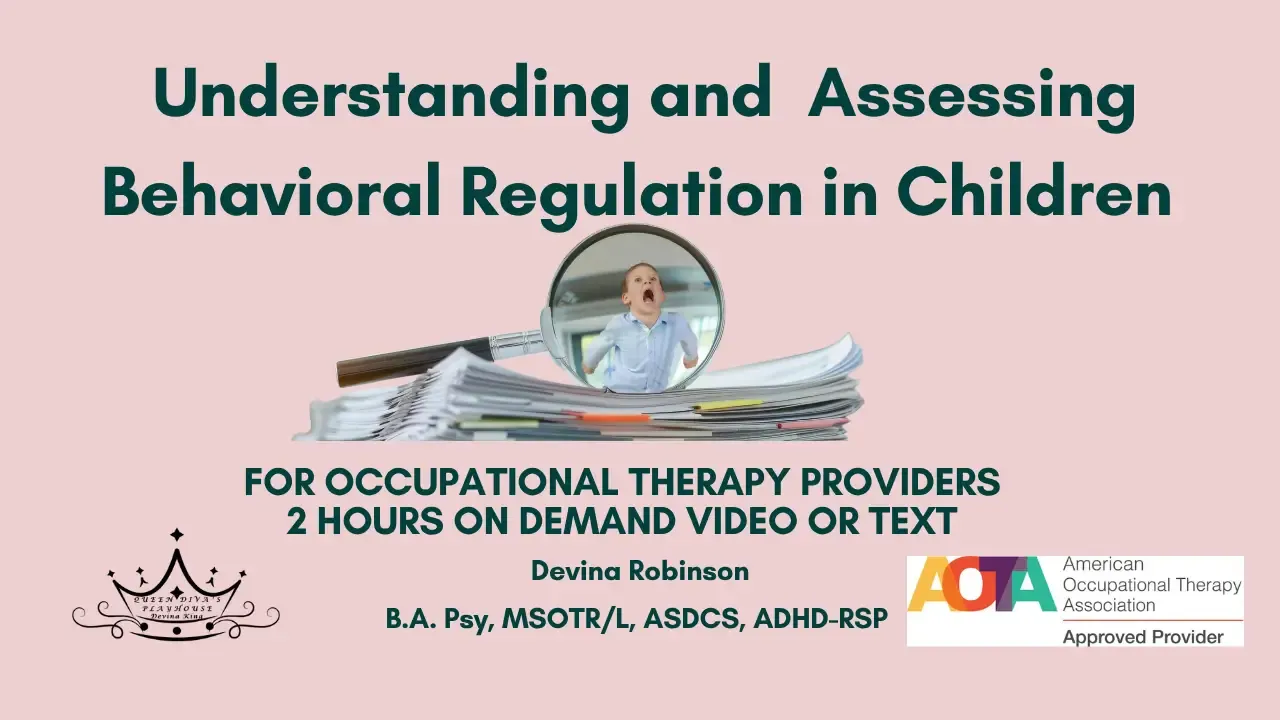
Go from Managing Behaviors to Making Meaningful Changes by Getting to the Root Cause with Understanding and Assessing Behavioral Regulation in Children
Your explanation shapes your intervention. If your why is wrong your interventions will fail.
Let's break free from the cycle of guessing and firefighting and treat the root causes for real lasting change.
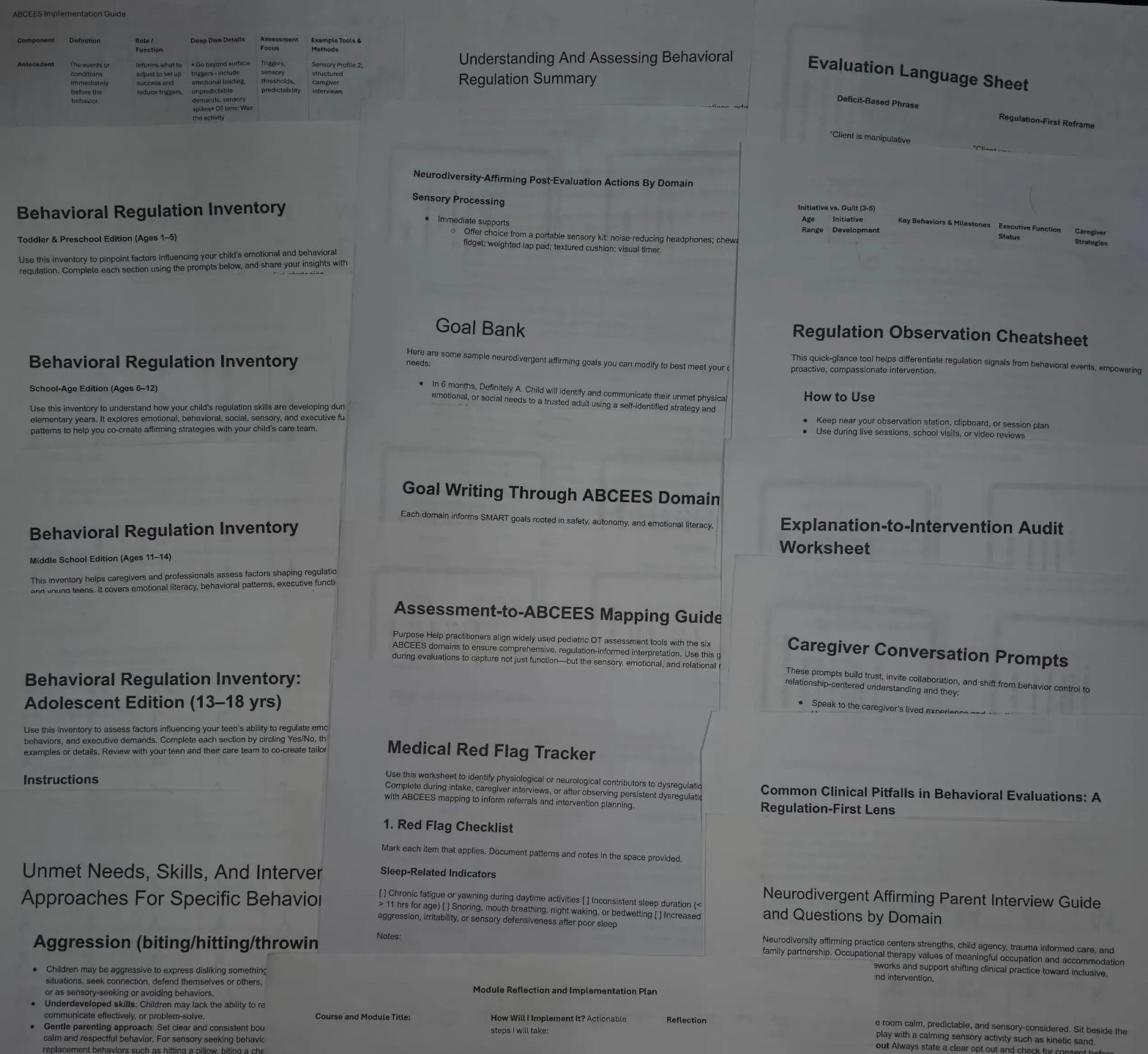
Get 25 practical tools: screeners, goal bank, and more. Earn .2 AOTA CEUs. Learn trauma informed, neurodivergent affirming frameworks and behavior assessment tools. All for only $49.
Be the therapist who makes real change
Research shows that 10 percent of children under the age of five experience clinically significant behavioral problems, and the rate is even higher among populations served by occupational therapy practitioners. These early challenges ripple through participation,learning,and family well-being. Effective behavior treatment starts with effective behavior assessment to determine causes of behavioral challenges.
Learn to identify the root cause. Pinpointing root causes gives you:
-
Targeted interventions: Move beyond “It’s behavior” to “what’s driving it,” so every strategy is laser-focused on the child’s needs
-
Faster progress: Address sensory overload, executive function gaps,unmet emotional needs, or communication breakdowns and see meaningful gains sooner
-
Reduced burnout: Spend less time on trial and error and more time feeling confident that your plan will work
-
Stronger rapport: Families and children sense when you understand the “why” behind behaviors, which builds trust, collaboration, and long-term buy-in
Be the therapist who is unshakeably prepared
This two-hour CEU bridges what you already know (kids need guidance) with what you’ve needed:a clear root-cause assessment process that is practical,evidence-based,and grounded in lived experience.
-
Print 25 neurodivergent-affirming assessment forms, goal-writing templates,and other tools on the fly
-
Support regulation across childhood, from boundary-testing toddlers to teens navigating executive function challenges
Be the therapist who uses evidence-based tools made for real sessions, real kids, real OTPs
Your training draws from multiple 2025 meta-analyses and systematic reviews,all with direct application for clinic and home. Apply what others only theorize with tools ready for immediate use:
-
SMART goal bank spanning emotional regulation,executive function,social participation,and more: write goals in minutes,not hours
-
Behavior screening tool built to save time and uncover hidden drivers of dysregulation
-
Quick-reference cheat sheet for root-cause prompts and intervention mapping
-
Module reflection and implementation plan so you leave knowing exactly which clients you will support first
-
Learn at your own pace with self-paced text and video modules.
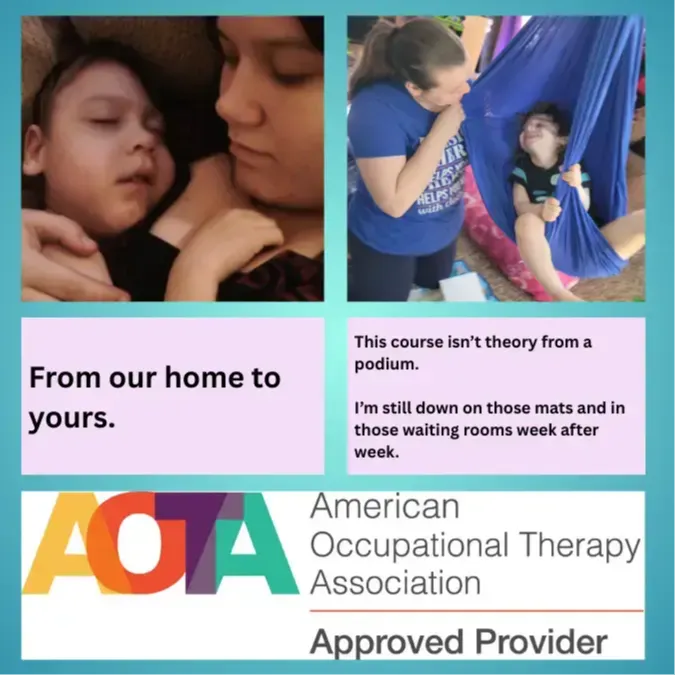
Learn from lived experience: We lived it. We overcame it. I’m here to walk you through it
I was a young mother raising a daughter with early-onset bipolar disorder while also meeting the needs of my other child with very little guidance. I create educational materials because it was the information I wish I had,or any of the professionals I went to for help had,when she was young. Today she is a testament to the transformative power of empathy, structure, and systematic teaching of behavioral regulation.
Only $49 for clinical clarity, lasting tools, and support that honors real life.
Expert instructor: Devina Robinson, B.A. Psy,MSOTR/L, ADHD-RSP, ASDCS (Devina King) experience and credentials
- Master’s in Occupational Therapy: 10+ years practicing as an OT in clinics, hospitals, schools, and homes.
- 17+years working with children and families
- Bachelor's in Psychology: Early career in psychology and mental health
- Lived experience as an autistic adult and parent to child with bipolar disorder and generalized anxiety disorder and trauma history that caused extreme behaviors
- Certified ADHD Rehabilitation Service Provider (ADHD-RSP)
- Certified Autism Spectrum Disorder Specialist (ASDCS)
- Adjunct faculty+curriculum designer in MSOT education
- Author of From Surviving to Thriving:The Art and Science of Guiding Children to Develop Behavioral Regulation and The ABCs of Feelings:Sensory Solutions for Every Feeling
Learning Outcomes
Behavior being a form of communication is a concept that most therapists have heard a thousand times. But how to see past the “behavior” to understand the needs the child is trying to communicate is something many caregivers struggle with. Throughout this course I will use caregivers to refer to anyone who is interacting with the child. This can include the parents,teachers,daycare providers,therapists who are providing interventions,etc. In this course,we will delve into the roots of behavior and shift our perspectives on why children “misbehave.”
By the end of this section participants will be able to:
- Define behavioral regulation,its importance in child development,and occupational therapy’s unique role.
- Categorize the 11 essential life skills and reorganize them to align with the corresponding OTPF-4 domains.
- Plan areas of intervention using the ABCEES framework to address specified behavioral challenges.
- Predict changes in a child’s behavior by analyzing fluctuations in medical status,sleep patterns,and environmental factors.
- Differentiate and sequence the stages of childhood social-emotional development to guide assessment and intervention planning.
Behavioral regulation is a crucial developmental skill that allows children to manage their emotions,behaviors,and impulses in a socially acceptable way. It is the ability to control one's actions and reactions to meet their needs while considering the needs and expectations of others. Effective behavioral regulation enables children to navigate social interactions,achieve their goals,and maintain positive relationships with those around them.
Full course outline
Introduction
Learning Outcomes
Definition of Behavioral Regulation
Why Occupational Therapy Practitioners Should Address Behaviors
Doing Their Best
Neurodivergent-Affirming Assessment of the Functions of Behavior
Your Explanation Guides Your Intervention
Assessment Tools for Behavioral Regulation and Related Areas
-
ABCEES framework for analyzing behavior
-
Behavioral Regulation Inventory
-
PEOP model overview
-
Behavior assessments
-
Coping skills assessments
-
Sensory processing assessments
-
Executive function assessments
-
Emotional regulation assessments
-
Self-report options for older children
-
Vineland Adaptive Behavior Scales (Vineland-3)
-
Identifying strengths and preferences
Technology and Observation Strategies
-
Telehealth assessments
-
Skilled observation using apps and games
Medical Roots of Behavior
-
Collaboration with medical teams
-
Sleep and behavior
-
Mind-body connection
-
Allergies
-
Tics:motor,vocal,oppositional
-
Managing tics
-
PANDAS
-
Gut health and diet (gut-brain connection)
-
Interventions and Support
-
Nutrition strategies
-
Metabolic disorders and diabetes management
-
Hydration guidelines
-
Pain management strategies
-
Obesity interventions
Brain-Based Differences and Differential Diagnosis
-
Autism Spectrum Disorder (ASD)
-
Attention-Deficit/Hyperactivity Disorder (ADHD)
-
Dyslexia
-
Dyspraxia
-
Pathological Demand Avoidance (PDA)
-
Bipolar disorder
Key Considerations for Occupational Therapy Practitioners
-
Diagnostic overshadowing
-
Health disparities in neurodivergent populations
-
Anxiety
-
Medication side effects
Understanding Behavioral Developmental Milestones
-
Milestone variability
-
Erikson’s stages of psychosocial development
-
Developmental delay
Family and Caregiver Involvement
Cultural Competence in Assessment
Implementing Assessment Findings
-
Goal setting
-
Intervention planning
Conclusion
References, Screeners, Goal bank, Handouts
Legalities: Disclosures, Refunds, ADA Requests, Approved Provider Statement, Privacy Policies and Terms
Queen Diva's Playhouse, LLC is an AOTA Approved Provider of professional development. PD activity approval ID# 13861. This independent distance learning activity is offered at 0.2 CEUs, Advanced, Occupational therapy service delivery and Foundational skills. The assignment of AOTA CEUs does not imply endorsement of specific course content, products, or clinical procedures by AOTA or indicate AOTA approval of a certification or other professional recognition.
Meets the requirements of NBCOT professional development units (PDUs) for 2.5 hours.
For ADA or special-needs requests, contact [email protected].
For special needs/ADA requests contact me at [email protected]. Certificate of Completion and AOTA CEUs: Provided with successful completion of course, survey, and exam completion with an 80% passing score.
Disclosures: I'm the author of From Surviving to Thriving:The Art and Science of Guiding Children to Develop Behavioral Regulation and have used images from this book and will receive financial compensation from purchases of this book.
Refund/Cancellation Policy
All of Queen Diva's Playhouse, LLC courses will be independent distance learning so will not be cancelled by the provider. However, if something unexpected comes up where the provider was forced to stop offering the course or the course became inaccessible to the learner before they finished the course; Queen Diva's Playhouse,LLC will provide a refund to those who have not finished the course.
Queen Diva's Playhouse, LLC will consider refunds on a case by case basis when requested by learners due to learners being able to download course content as soon as they login. Queen Diva's Playhouse,LLC courses will all be self-paced significantly reducing likelihood a learner would need to cancel. Contact information:[email protected]
You can find our privacy policies here.